This course presents a discussion of the general, architectural and structural considerations applicable to the design of hydroelectric power plant structures.
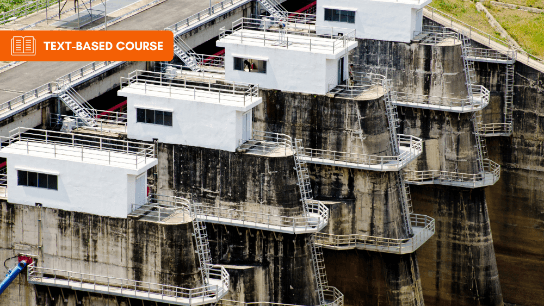
This course presents a discussion of the general, architectural and structural considerations applicable to the design of hydroelectric power plant structures. It is intended for the guidance of engineers responsible for the planning and design of such structures. It should also be used in establishing minimum criteria for the addition of hydropower facilities at existing sites.
Topics: Hydroelectric Design Introduction and General Requirements Switchyard and Transformer Criteria Highway and Railroad Access Other Site Features Types of Powerhouses, Selection Criteria, Specifications General Arrangement of Powerhouse Powerhouse and Switchyard Equipment Powerhouse Auxiliary Equipment Architectural Requirements for Interior and Exterior design Schedule of Finishes Structural Requirements Design Stresses and Loads, Stability Analysis Subgrade Conditions and Treatments Foundation Drainage, Retaining Walls, and Grouting Substructure Functions and Components Joints, Waterstops, Draft Tubes Spiral Cases, Generator Pedestals, Bulb Turbine Supports Types of Superstructures Intake, Penstock, and Surge Tank Design Switchyard Structures Reinforcing Steel, Encasement of Structural Steel
Intended Audience: This course is intended for Energy, Electrical, Geotechnical, Civil, Construction, Hydraulic, Structural, Foundations, and other engineers whose job description may require an intermediate knowledge of the design and construction of hydropower facilities.
Publication Source: US Corp of Engineers
Civil Engneering faculty member for 27 years
Dr. Rossow is a graduate of the University of Michigan with B.S., M.S., and Ph.D. degrees. He is a licensed Professional Engineer in the State of Illinois. He taught civil engineering for over 35 years, including six years at Washington University in St. Louis and 29 years at Southern Illinois University Edwardsville, where he was the Chair of the Civil Engineering Department for ten years. His areas of expertise are in civil engineering and mechanics. He has consulted for various organizations, including government agencies and an international offshore drilling company. He has published numerous technical journal articles and technical reports for a variety of governmental agencies and private sector organizations. Mark P. Rossow, PE, PhD Licensed Professional Engineer in State of Illinois License No. 062.040560 Dr. Rossow is a graduate of the University of Michigan with B.S., M.S., and Ph.D. degrees. He taught civil engineering for over 35 years, including six years at Washington University in St. Louis and 29 years at Southern Illinois University Edwardsville, where he was the Chair of the Civil Engineering Department for ten years. His areas of expertise are in civil engineering and mechanics. He has consulted for various organizations, including government agencies and an international offshore drilling company. He has published many journal articles and technical reports.
