This course provides information and guidance on roundabouts

Under some circumstances, roundabouts offer many advantages over other intersection control options: fewer vehicle accidents, higher capacity, reduced maintenance costs, better appearance, and increased pedestrian safety. For example, in foreign countries where the use of roundabouts is well-established, traffic engineers almost always choose roundabouts in situations where U.S. engineers would choose all-way stop controls: all-way stop control is virtually nonexistent in these countries.
This course provides information and guidance on roundabouts and is intended to help engineers and planners identify situations where roundabouts should be used and what kind of roundabout should be selected. The material contained in the course has been developed with input from transportation practitioners and researchers from around the world.
Topics: Defining physical features and key dimensions Distinguishing roundabouts from other circular intersections Multimodal considerations Costs associated with roundabouts Legal considerations Public involvement and education in the use of roundabouts Planning steps for implementing roundabouts Determining number of entry lanes Types of roundabouts from which to choose Comparing operational performance of alternatives Space requirements
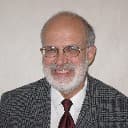
Civil Engneering faculty member for 27 years
Dr. Rossow is a graduate of the University of Michigan with B.S., M.S., and Ph.D. degrees. He is a licensed Professional Engineer in the State of Illinois. He taught civil engineering for over 35 years, including six years at Washington University in St. Louis and 29 years at Southern Illinois University Edwardsville, where he was the Chair of the Civil Engineering Department for ten years. His areas of expertise are in civil engineering and mechanics. He has consulted for various organizations, including government agencies and an international offshore drilling company. He has published numerous technical journal articles and technical reports for a variety of governmental agencies and private sector organizations. Mark P. Rossow, PE, PhD Licensed Professional Engineer in State of Illinois License No. 062.040560 Dr. Rossow is a graduate of the University of Michigan with B.S., M.S., and Ph.D. degrees. He taught civil engineering for over 35 years, including six years at Washington University in St. Louis and 29 years at Southern Illinois University Edwardsville, where he was the Chair of the Civil Engineering Department for ten years. His areas of expertise are in civil engineering and mechanics. He has consulted for various organizations, including government agencies and an international offshore drilling company. He has published many journal articles and technical reports.
