Master surge control, predict water hammer effects, and design resilient protection systems to safeguard critical water infrastructure from destructive pressure transients.
Hydraulic transients are among the most underestimated risks within water, wastewater, hydropower, and pumped pipeline systems. Pressure surges caused by rapid valve closures, pump trips, turbine operations, emergency shutdowns, or grid instability can generate forces far exceeding normal operating conditions, resulting in pipe failure, structural damage, vibration, fatigue, cavitation, and catastrophic system instability. Despite this, transient analysis is often simplified or introduced too late within project delivery, creating major operational and resilience risks across critical infrastructure.
This session examines hydraulic transients and surge behaviour from a practical hydraulic engineering perspective. The webinar explores water hammer theory, transient modelling, surge mitigation systems, pressure tunnel behaviour, operational sequencing, and the interaction between hydraulic design assumptions and real-world infrastructure performance. Participants will gain practical insight into how engineers evaluate transient events, interpret modelling outputs, and develop resilient hydraulic systems across water and energy infrastructure environments.
The session also considers how increasing network complexity, renewable energy integration, pumped storage hydropower, ageing assets, and operational variability are reshaping approaches to transient analysis and hydraulic resilience within modern infrastructure systems.
Key Topics Discussed:

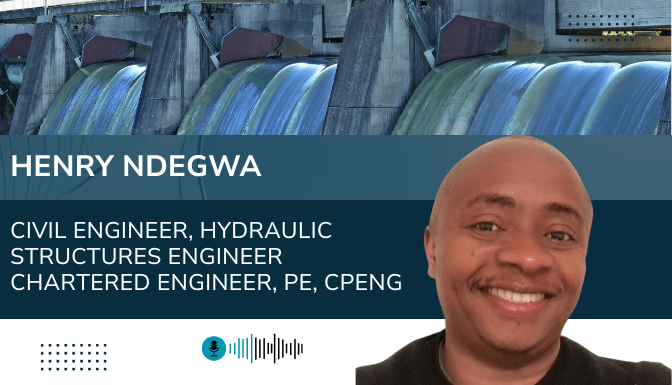
Civil Engineer | Hydraulic Structures Engineer | Chartered Engineer| PE | CPEng
Eng Henry Ndegwa is a Professional Engineer with the Engineers Board of Kenya, Institution of Civil Engineers UK and Engineering New Zealand. He has 17 years experience in development of large scale infrastructure projects across 4 continents. He holds a BSc. Water and Evironmental Engineering from Egerton University, M.Sc Urban Management and Development from Erasmus University Rotterdam and M.Sc Civil Structural from, EIT Perth. Henry founded Aidigi Limited in 2023 and is currently Non Executive Business Development and Strategy Lead.
