This course describes landscape positions which include: streams, floodplains, wetlands, stream corridors, and riparian zones
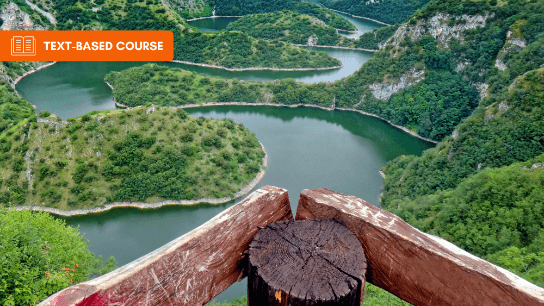
Fluvial systems are described as "a continuum longitudinally and laterally that grade across the various landscape positions and have common functions and attributes". A selection of classification and assessment methodologies currently available for various landscape positions is presented and the applicability of each is described. This course describes landscape positions which include: streams, floodplains, wetlands, stream corridors, and riparian zones, and this course uses the term “fluvial system” to include these landscapes under a single term.
Topics: Introduction to the fluvial system landscape Connectivity, hydrologic complexity Fluvial systems without a stream component Hydrogeomorphic wetland classification system Defining the stream component of the fluvial system Use of stream order in fluvial systems Classification systems for the stream component Fluvial system assessment models (SVAP, PFC ) Summary of classification and assessment systems Soil hydrodynamics for fluvial systems Soil taxonomy, hydric soils Importance of epi- and endosaturation interpretations Fluvial systems with organic soils (Histosols).
Intended Audience: primarily for stream, hydraulic, water resource, civil, construction, and environmental engineers.
Publication Source: USDA NRCS

Dr. Moghraby has a Doctorate in Biochemistry and a Master's in Business Administration with over 20 years of experience in science. She has extensive international experience working in the academic and health sectors, including the Massachusetts Institute of Technology (MIT) in the USA, as an Assistant Professor teaching students of a variety of backgrounds, levels, and abilities, as well as a scientist and Project Director. Dr. Moghraby provides educational courses on many different scientific principles that underlie engineering for engineering professionals.
