
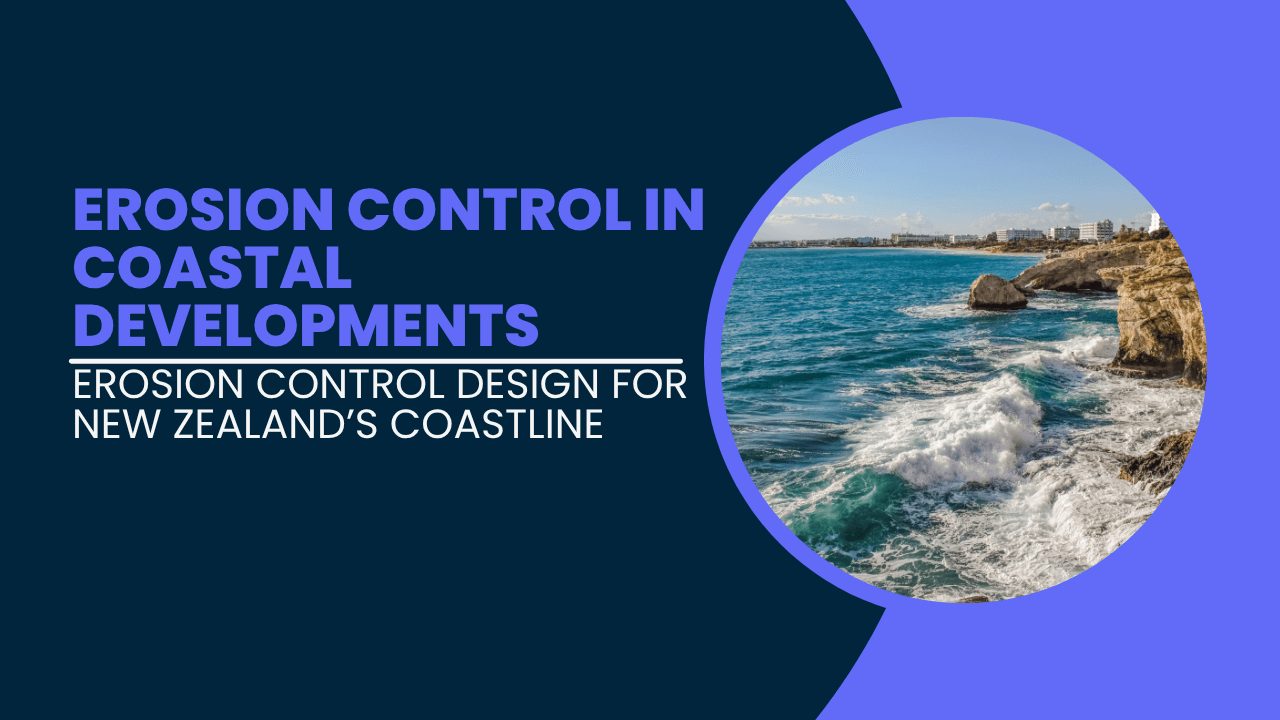



Erosion Control in Coastal Developments
New Zealand's 15,000 kilometres of coastline present unique challenges for engineering professionals tasked with designing resilient coastal developments. This article explores proven erosion control design strategies specifically tailored to NZ coastal conditions, addresses common design pitfalls, and provides practical implementation guidance for today's regulatory environment. You'll discover how to integrate effective erosion control measures that protect both infrastructure investments and natural coastal ecosystems.
Understanding Coastal Erosion Dynamics in New Zealand
Wave Energy and Sediment Transport Patterns
Coastal erosion in New Zealand operates through complex interactions between wave energy, tidal forces, and sediment transport patterns unique to our geographic setting. The country's exposure to both Pacific and Tasman Sea weather systems creates variable erosion pressures that demand sophisticated design responses.
Consider the Kapiti Coast, where the Coastal Restoration Trust and NIWA have documented complex erosion patterns varying from 0.4-0.6 metres per year accretion in some areas to sustained erosion in others. The Kapiti Coast District Council reports that areas like Paekākāriki and Raumati South have experienced sustained coastal erosion, while other sections show natural accretion. This variability demonstrates that effective erosion control design requires understanding local wave climates, sediment budgets, and long-term coastal processes rather than applying generic solutions.
Critical Design Factors
The key factors that distinguish successful erosion control design in NZ coast projects include:
-
Site-specific wave climate analysis - Understanding fetch distances, storm frequencies, and seasonal variations
-
Sediment budget calculations - Quantifying longshore transport rates and identifying sediment sources and sinks
-
Geological substrate assessment - Evaluating underlying rock hardness, joint patterns, and weathering rates
-
Hydrodynamic modelling - Predicting wave transformation and current patterns around proposed structures
Research from the University of Auckland's Coastal Change Dataset provides nationwide coverage of coastal erosion and accretion patterns from the 1940s to the present day, offering engineers crucial baseline data for informed design decisions.
The key takeaway for engineering professionals is that erosion control design for NZ coast projects must begin with comprehensive site-specific coastal process analysis. This foundation enables designs that work with natural systems rather than against them, resulting in more durable and cost-effective outcomes.
The Inadequate Armouring Trap
Why Traditional Approaches Fall Short
Many coastal developments fail because designers default to hard armouring solutions without considering the broader coastal system impacts. This approach often leads to increased erosion at adjacent sites and accelerated failure of the protection works themselves.
A prominent example occurred along Auckland's eastern beaches, where initial rock revetment installations in the 1990s created reflection scour that undermined adjacent unprotected coastline. As documented in NIWA's coastal erosion research, hard armouring can be effective locally but often simply transfers erosion problems elsewhere along the coast.
The challenge for engineers lies in understanding when and where different approaches are appropriate within New Zealand's diverse coastal environments.
The Systems-Thinking Solution
Modern erosion control requires hybrid approaches combining hard engineering with natural systems. However, many engineers lack marine-specific knowledge—particularly how concrete carbonation accelerates 3-5 times faster in salt spray zones compared to inland conditions.
For engineers seeking to strengthen their expertise in these critical areas, building competency in both structural coastal protection and landscape-based erosion control methodologies has become essential professional development.
Regulatory Framework and Design Standards
Current Legislative Requirements
New Zealand's coastal development regulations under the Resource Management Act 1991 and New Zealand Coastal Policy Statement 2010 require erosion control designs to demonstrate long-term sustainability and minimal adverse effects on coastal processes. Engineering professionals must navigate these requirements while delivering effective protection for clients.
The Ministry for the Environment's coastal hazards guidance emphasises risk-based approaches that account for sea level rise projections of up to 1.0 metres by 2120. This regulatory environment demands designs that can adapt to changing conditions rather than static solutions.
Implementation Requirements
Practical implementation requires:
-
Detailed coastal hazard assessments following current best practice guidelines
-
Integration of climate change projections into design life calculations
-
Consideration of retreat options and adaptive management strategies
-
Compliance with regional coastal plan requirements
-
Stakeholder engagement with iwi, communities, and environmental groups
Professional Competency Expectations
Regional councils now mandate adaptive management approaches, requiring engineers to design modular systems that can be modified as conditions change. For example, galvanised steel connections in marine environments suffer pitting corrosion within 15-20 years due to chloride ingress, yet many engineers still specify standard galvanising.
The key takeaway here is that engineers should specify duplex stainless steel (2205 grade) for critical coastal connections and design structures with replaceable connection elements accessible for maintenance without full reconstruction.
Continuing Professional Development for Coastal Engineers
Meeting Engineering New Zealand Requirements
Engineering New Zealand requires practising engineers to maintain current competency through completing a minimum of 40 hours of CPD activities each year. Coastal engineering presents particular challenges due to rapidly evolving best practices, climate change impacts, and emerging technologies.
The CPD requirements emphasise completing a range of activities across different competency domains, professional and technical, that are appropriate to your career stage and help maintain or improve knowledge, skill, or judgement in your area of engineering practice.
Specialized Training Pathways
Coastal engineering requires both structural knowledge and landscape-based solutions. Coastal construction addresses tidal constraints and salt exposure challenges, while NRCS design of terraces for erosion control provides systematic approaches for drainage management and slope stability.
Building Integrated Expertise
Successful coastal erosion control increasingly requires understanding how different protection methodologies work together as integrated systems. This includes both structural solutions and landscape-based approaches that can provide sustainable, long-term protection when properly coordinated.
For engineers seeking comprehensive development across these interconnected technical areas, the 40-hour package structural engineering offers integrated coverage that builds systematic expertise. This comprehensive approach ensures engineers develop a coordinated understanding rather than fragmented knowledge across the multiple specialisations required for successful coastal engineering practice.
For detailed information on CPD requirements and approved learning activities, New Zealand engineers should consult the Engineering New Zealand CPD guidelines, and for a limited time, you can save 15% off all courses using code JULY-25.

Conclusion
Effective erosion control design for New Zealand's coast requires more than technical competency; it demands understanding of local coastal processes, regulatory requirements, and long-term adaptation strategies. The most successful coastal developments result from engineers who combine site-specific analysis with systems thinking and adaptive management approaches. Rather than asking whether your current erosion control approach meets minimum standards, consider whether it positions your projects to thrive in New Zealand's dynamic coastal environment over the coming decades.