
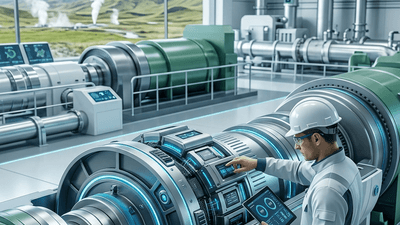



When we discuss the future of New Zealand engineering, the conversation naturally gravitates toward sweeping infrastructure mega-projects, systemic grid overhauls, or the latest developments in seismic resilience. Yet, any seasoned engineer knows that the true battle for operational efficiency is won or lost in the details. It is fought in the plant rooms, on the machine shop floors, and along the remote pipelines that form the circulatory system of our industrial economy. Today, a quiet revolution is occurring at the component level. From massive flow vacuum systems to microscopic cutting precision and remote asset preservation, incremental upgrades in foundational technologies are reshaping what is possible for heavy industry in Aotearoa.
To understand the current trajectory of our manufacturing and infrastructure sectors, we must look at the tools and systems empowering them. Recent developments in process vacuum technology, internal machining, and remote cathodic protection reveal a clear trend: New Zealand industry is aggressively pursuing automation, energy efficiency, and extended asset lifecycles to offset geographic isolation and current economic headwinds.
The Heart of the Plant: Revolutionising Industrial Vacuum Technology
For decades, traditional liquid-ring or oil-sealed vacuum pumps have been the reliable, if somewhat inefficient, workhorses of New Zealand's massive food, beverage, and packaging sectors. However, as energy costs fluctuate and environmental compliance strictures tighten, the tolerance for energy-hungry, high-maintenance equipment is rapidly diminishing.
This shifting landscape is perfectly illustrated by the introduction of the DHS 3000 VSD+ dry screw vacuum pump by Atlas Copco. Engineered specifically for massive flow industrial applications, this technology represents a significant leap forward for local manufacturers.
Why "Dry" and "VSD" Matter for Aotearoa
The shift to dry screw technology is particularly relevant for New Zealand's dominant primary industries, such as dairy processing and premium food packaging, where product purity is paramount. By eliminating oil or water from the vacuum chamber, dry screw pumps remove the risk of process contamination and eliminate the need for costly effluent treatment.
"The integration of Variable Speed Drive (VSD) technology into massive flow systems is no longer a luxury; it is a baseline requirement for modern energy management. By matching pump speed to actual process demand, plants are seeing energy consumption drop by up to 50% compared to fixed-speed alternatives."
For New Zealand plant engineers, the practical implications of adopting systems like the DHS 3000 VSD+ include:
- Energy Resilience: Lower peak loads and reduced overall power consumption in an era of unpredictable wholesale electricity markets.
- Reduced Footprint: Modern screw pumps boast a significantly smaller, more compact canopy, freeing up valuable plant room real estate.
- Maintenance Predictability: Fewer moving parts and the absence of oil changes drastically reduce planned downtime, a critical factor for facilities operating 24/7 during peak harvest or milking seasons.
Precision at the Cutting Edge: Overcoming Internal Turning Bottlenecks
Moving from the plant room to the manufacturing floor, the drive for efficiency becomes a matter of microscopic precision. New Zealand's advanced manufacturing sector—producing everything from aerospace components to specialized agricultural machinery—relies heavily on CNC machining. However, internal turning (boring) remains one of the most notoriously difficult operations in metal cutting.
The challenges are well-known to any manufacturing engineer: poor chip evacuation leads to surface gouging, while the overhang of the boring bar invites chatter and vibration, ultimately compromising dimensional accuracy and tool life. Addressing this bottleneck, metal-cutting specialist Sandvik Coromant has introduced the CoroTurn PI, a new family of internal turning tools designed to boost both security and speed.
The Mechanics of Enhanced Productivity
Tooling innovations like the CoroTurn PI are not merely about cutting faster; they are about cutting smarter. By utilizing advanced insert geometries and optimized coolant delivery systems, these tools force the metal chips to break predictably and flush out of the bore smoothly.
| Machining Metric | Traditional Internal Turning | Next-Gen Tooling (e.g., CoroTurn PI) |
|---|---|---|
| Chip Evacuation | Prone to jamming; requires frequent manual clearing. | High-precision coolant jets ensure predictable chip breaking and flushing. |
| Vibration Control | High chatter risk, especially at high length-to-diameter ratios. | Dampened boring bars and optimized cutting angles minimize deflection. |
| Process Security | Requires constant operator supervision. | High reliability enables "lights-out" (unmanned) machining shifts. |
For New Zealand machine shops grappling with a chronic shortage of skilled CNC operators, the ability to run machines "lights-out" with absolute confidence in process security is a game-changer. It shifts the engineer's focus from firefighting daily production issues to optimizing overall workflow and exploring new, complex geometries that were previously too risky to quote.
Preserving the Periphery: Cathodic Protection in the Wild
While factory floors demand precision, New Zealand’s remote infrastructure demands extreme durability. From geothermal pipelines in the central North Island to marine structures in Fjordland, our engineering assets are constantly subjected to some of the most corrosive environments on earth.
Corrosion is a silent thief of capital expenditure. To combat this, remote asset managers are increasingly turning to advanced, automated preservation systems. A prime example is the recent work by Omniflex in providing essential cathodic protection (CP) for remote areas.
The Shift to Automated Telemetry
Traditional cathodic protection—whether galvanic or impressed current—requires regular manual testing to ensure the protective current is adequately preventing oxidation of the steel asset. In New Zealand's rugged topography, sending a technician to take readings at remote test posts is not only expensive but inherently hazardous.
The integration of IoT (Internet of Things) and advanced telemetry into CP systems is revolutionizing infrastructure maintenance. By utilizing remote monitoring units, engineers can now receive real-time data on pipe-to-soil potentials, transformer rectifier outputs, and system faults directly to their dashboards in Auckland, Wellington, or Christchurch.
Furthermore, automated CP systems can dynamically adjust their current output to compensate for environmental changes—such as soil moisture fluctuations after heavy rain—ensuring optimal protection without over-polarizing and damaging the asset coating.
Conclusion: The Sum of Its Parts
The future of New Zealand engineering will undoubtedly feature grand designs and sweeping innovations. Yet, as demonstrated by the deployment of massive flow dry vacuum pumps, high-security internal turning tools, and telemetric cathodic protection, our immediate industrial resilience is being forged at the component level.
For engineering professionals in Aotearoa, the mandate is clear: staying globally competitive requires a relentless pursuit of operational efficiency in the engine room. By embracing these highly specialized, iterative technologies, we are not just upgrading our machinery; we are future-proofing the very foundation of New Zealand's industrial capability. The quiet revolution is well underway, and it is built on precision, automation, and an uncompromising approach to long-term asset management.