
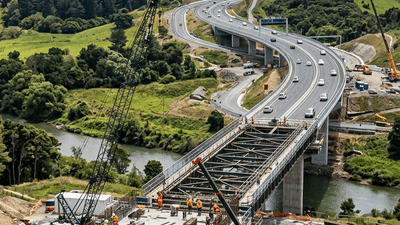



Engineering in Aotearoa is a discipline increasingly defined by its extremes. On one end of the spectrum, we are pushing the boundaries of material science and sustainable design to deliver world-class infrastructure. On the other, the stark reality of professional liability serves as a sobering reminder that our margins for error are razor-thin. For New Zealand's engineering professionals, navigating this landscape requires a delicate balance: embracing cutting-edge innovation while maintaining an uncompromising grip on fundamental accountability.
This duality has been on full display in recent weeks, highlighted by a series of industry developments that chart the course for the future of our built environment. From celebrating landmark public works to unpacking the hard lessons of high-profile project failures, the message is clear: the future of New Zealand engineering demands both brilliance and diligence.
Setting the Benchmark: The IPWEA Awards
The recent announcement of the Institute of Public Works Engineering Australasia (IPWEA) award winners serves as a powerful testament to what the local sector can achieve when innovation meets execution. Highlighting landmark New Zealand infrastructure projects, the awards placed a heavy emphasis on two non-negotiable pillars of modern engineering: the integration of smart technology and environmental sustainability.
Today's award-winning public works are no longer just about pouring concrete and laying asphalt. They are highly integrated systems that leverage real-time data, sustainable urban drainage, and low-carbon materials. These projects demonstrate that public infrastructure can go beyond mere utility to actively enhance community resilience and ecological health.
The Material Edge: Advanced High-Strength Steels
Achieving the ambitious designs celebrated by IPWEA often relies on unseen innovations in the supply chain. A prime example is the growing adoption of advanced high-strength steels (AHSS) across the civil and structural sectors. As recently reported, advanced steels are driving more efficient fabrication across New Zealand.
Historically confined to automotive manufacturing, these materials are now seeing broader application in structural engineering. For local fabricators and design engineers, the practical implications are significant:
- Reduced Wall Thickness: Engineers can specify thinner sections without compromising structural performance or seismic resilience.
- Weight Reduction: Lighter structural components reduce transportation emissions and ease on-site handling and craning requirements.
- Cost Efficiency: While the per-tonne cost of AHSS may be higher, the reduction in overall material volume and welding time often results in a lower net project cost.
By leveraging these materials, engineers can push the envelope on design while meeting the stringent sustainability metrics demanded by modern public works procurement.
The Sobering Reality of Professional Accountability
However, the celebration of industry triumphs must be tempered by a willingness to confront our failures. The recent disciplinary actions surrounding the abandoned Harington Street Transport Hub in Tauranga provide a stark case study in professional accountability.
Engineering New Zealand confirmed that two engineers have been fined and one suspended from the Chartered Professional Engineer (CPEng) register for their roles in the project. The building, which was plagued by severe seismic design flaws, was ultimately deemed too expensive to remediate and had to be demolished, resulting in tens of millions of dollars in wasted public funds.
"The Harington Street failure is a painful but necessary reminder that peer review, robust quality assurance, and a deep adherence to foundational design principles cannot be sidelined by project timelines or budgetary pressures."
For practicing engineers, the disciplinary committee's findings underscore several critical professional obligations. It highlights the absolute necessity of rigorous internal QA processes and the danger of operating outside one's specific area of structural competence without adequate oversight.
Contrasting Outcomes in Public Works
To understand the stakes of modern engineering, we can contrast the outcomes of rigorous versus flawed project execution:
| Project Outcome | Drivers of Success / Failure | Impact on Community & Profession |
|---|---|---|
| IPWEA Award Winners | Integration of tech, sustainable materials (e.g., AHSS), rigorous QA, collaborative design. | Enhanced public trust, long-term civic resilience, industry recognition and benchmark setting. |
| Harington St Transport Hub | Inadequate seismic design, failure in peer review processes, professional overreach. | Millions in wasted public funds, loss of critical infrastructure, professional suspension and fines. |
Codifying Safety: The Need for Regulatory Clarity
To prevent systemic failures, the industry relies on continuous updates to guidelines and regulations. A prime example of this ongoing effort is the recent push for barrier clarity in New Zealand.
Vehicle barriers—whether on highways, within parking structures, or protecting pedestrian zones—require complex engineering considerations. The new insights provided by Engineering New Zealand delve into the regulations surrounding when, where, and how these barriers should be implemented. It’s not just about stopping a vehicle; it’s about understanding load paths, dynamic impact forces, and site-specific risk assessments. Providing clear, codified expectations helps engineers design safer structures and reduces the ambiguity that can lead to catastrophic design flaws.
Building the Future Pipeline
Ultimately, neither material innovations nor rigorous accountability frameworks will matter if we do not have a skilled workforce to implement them. New Zealand is facing a well-documented infrastructure deficit, estimated to be in the tens of billions of dollars. Bridging this gap requires a robust pipeline of future engineers.
In a highly strategic move, the Government recently decided to make science compulsory for Year 11 students. Engineering New Zealand has strongly supported this, noting that this Year 11 science change supports future engineers and is a vital step toward tackling the infrastructure deficit.
By ensuring that a broader cohort of students retains a foundational understanding of physics, chemistry, and mathematics, the sector is better positioned to attract diverse talent into tertiary engineering programs. This educational mandate is not just a curriculum update; it is a long-term economic lever designed to secure the intellectual capital required to build tomorrow's Aotearoa.
Conclusion
The current landscape of New Zealand engineering is a complex matrix of brilliant innovation and strict accountability. As we celebrate the sustainable, tech-driven triumphs recognized by the IPWEA, we must also internalize the hard-won lessons of projects like the Harington Street Transport Hub. By leveraging advanced materials, adhering to clear regulatory guidelines, and supporting the educational pathways of our future workforce, we can ensure that our public works not only stand the test of time but actively elevate the communities they serve.