
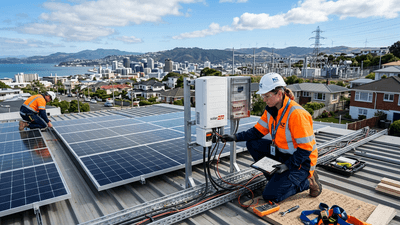



New Zealand is racing toward a decentralized, renewable energy future, but there is a familiar, frustrating speed bump on the roof: compliance. For years, the push to blanket our residential and commercial rooftops in photovoltaic (PV) panels has run headfirst into a web of structural assessments, electrical inspections, and localized network approvals. Now, the regulatory landscape is shifting, and engineering professionals need to prepare for the fallout.
As recently reported by pv magazine, the New Zealand government has ordered a comprehensive sector review into the installation rules governing residential and small-scale solar. The primary objective is clear: accelerate the rollout of rooftop PV by slashing engineering approval delays and reducing redundant inspection layers. But for the structural and electrical engineers who currently sign off on these systems, "reducing red tape" is a loaded phrase. It raises immediate questions about standardized design, building safety, and, crucially, liability.
The Tension Between Speed and Safety
To the average homeowner or solar salesperson, engineering oversight often looks like unnecessary bureaucracy. However, to a structural engineer, a roof is not just a blank canvas—it is a carefully calculated system of trusses, purlins, and cladding designed to withstand specific dead loads, live loads, and Aotearoa’s notoriously aggressive wind zones.
Adding a solar array introduces new variables. It alters the aerodynamic profile of the roof, potentially increasing wind uplift forces. It adds a continuous dead load to timber framing that, in many of New Zealand’s older housing stock, may already be compromised by age, borer, or moisture. On the electrical side, network engineers are grappling with the realities of feeding intermittent, decentralized power back into a grid that was historically designed for one-way traffic.
"The challenge for the engineering sector isn't about blocking progress; it's about ensuring that the rapid deployment of distributed energy resources doesn't compromise the structural integrity of our housing stock or the stability of our local networks."
What "Cutting Red Tape" Could Look Like
The government's sector review is likely to target the low-hanging fruit of the compliance process. For engineering professionals, this will likely manifest in a push toward standardized exemptions and pre-approved design frameworks.
1. Structural Standardization
Currently, many local councils require a Producer Statement (PS1 - Design) from a structural engineer to confirm that a specific roof can handle a specific solar array. The review is expected to explore standardized load allowances. For example, if a solar installation falls below a certain weight threshold (e.g., kg per square meter) and the home is situated in a low-to-medium wind zone, the requirement for a bespoke structural engineering assessment may be waived entirely.
2. Streamlined Electrical Connections
Electrical engineers and network planners can expect a push toward unified national standards for grid connection. Currently, lines companies (distributors) have varying requirements for inverter settings, export limits, and network connection approvals. The review will likely advocate for a "plug-and-play" standard for small-scale systems (typically under 10kW), removing the need for localized network engineering reviews for every single residential connection.
Comparing the Paradigms: Current vs. Proposed
To understand the practical shift, it helps to look at how the workflow for a standard residential solar installation might evolve if the review's recommendations are fully adopted.
| Process Stage | Current Framework (Typical) | Proposed/Streamlined Framework |
|---|---|---|
| Structural Assessment | Often requires a bespoke PS1 from a structural engineer, especially for older homes or high wind zones. | Standardized load tables; engineering sign-off only required for edge cases (e.g., extreme wind zones, heavy tile roofs). |
| Electrical Inspection | Requires sign-off by a registered electrical inspector, sometimes causing scheduling bottlenecks. | Potential for self-certification by accredited solar installers for standard residential systems. |
| Network Connection | Varies by local lines company; can require specific network engineering approval and bespoke export limiting. | Nationalized standard for systems under 10kW; automatic approval for compliant inverters. |
| Project Timeline | Can take 4 to 12 weeks from sale to final commissioning due to compliance wait times. | Targeting 1 to 3 weeks, relying heavily on standardized compliance pathways. |
The Liability Question for Engineers
The most pressing issue for the engineering community is the reallocation of risk. When you remove a mandatory Producer Statement from the compliance pathway, where does the liability fall if a roof sags under the weight of a new array, or if a panel is torn off during a severe nor'wester?
If the government moves toward a model where solar installers self-certify based on standardized tables, engineers must ensure those tables are robustly designed. The engineering profession—through bodies like Engineering New Zealand—must be actively involved in drafting these new "acceptable solutions." If we are stepping back from individual site inspections, our expertise must be heavily front-loaded into the overarching regulatory framework.
Opportunities in the Shift
While some consulting engineers may see a drop in revenue from routine residential solar assessments, this regulatory shift actually presents a vital opportunity to reallocate engineering resources to where they are needed most.
- Commercial and Industrial (C&I) Solar: As residential solar becomes commoditized, the real engineering challenges lie in large-scale C&I rooftop installations. These systems involve complex structural spanning, significant dead loads, and intricate grid-protection engineering.
- Battery Energy Storage Systems (BESS): The next wave of residential and commercial energy will be storage. Integrating heavy, fire-rated battery systems into existing structures requires high-level structural and fire engineering expertise that cannot be easily "standardized" away.
- Grid Modernization: Electrical engineers will be freed up to focus on the macro-level challenge: upgrading local transformers, substations, and network topologies to handle the massive influx of bidirectional power flow that this red-tape reduction will unleash.
Looking Ahead
The government’s mandate to reduce red tape for rooftop solar is a necessary step in New Zealand’s decarbonization journey. We cannot afford to have renewable energy targets stalled by paperwork. However, true efficiency in engineering does not come from simply ignoring risks; it comes from managing them smarter.
For New Zealand’s engineers, the upcoming sector review is a call to action. We must support the transition toward standardized, streamlined installations for standard residential homes, while fiercely protecting the integrity of our building and electrical codes. By doing so, the profession can step away from the administrative bottleneck and focus on engineering the resilient, high-capacity energy networks Aotearoa needs for the decades to come.